
海上钢琴师
China’s top pork-producing province rolls out homegrown 'gene chip' for breeding quality pigs_我的网站

A |
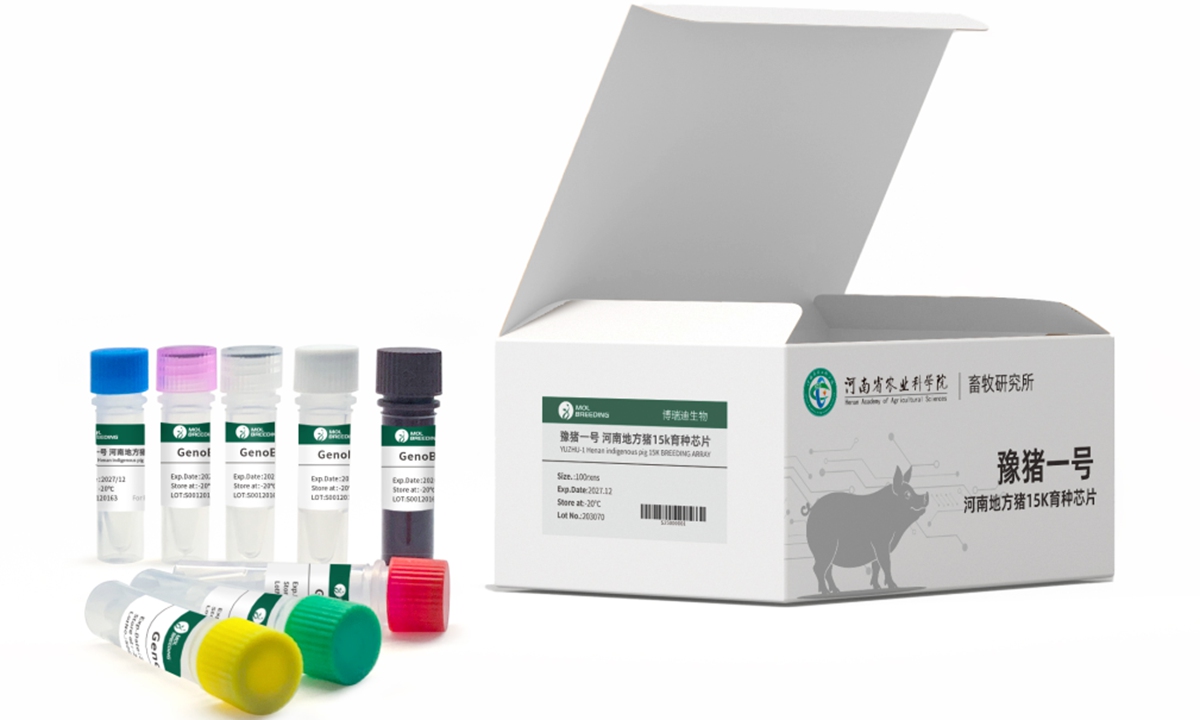
China's largest pork-producing province has introduced a genomic breeding tool designed for indigenous pig breeding, a sign that the province is shifting from expanding volume toward improving hog quality.
The Henan Academy of Agricultural Sciences announced the launch of Yuzhu-1 Henan indigenous pig 15k breeding array - commonly known as a gene chip - developed by the pig breeding team at its Institute of Animal Husbandry and Veterinary Science. It is the first such tool customized for the province's native pig stock, the institute said on Monday.
Henan is home to multiple native pig breeds prized by consumers for their good flavor. However, they carry a commercial burden compared with imported lean-meat breeds, as they grow more slowly, consume more feed per kilogram of weight gain and deliver thinner margins, noted Xing Baosong, head of the pig research office at the institute.
Lifting those hurdles depends on sharper selection, which in local herds has long relied on visual assessment of physical traits, which is slow and imprecise. Genomic tools can speed things up, but mainstream commercial chips were built on imported breeds and lose accuracy on native Chinese stock. Yuzhu No 1 instead draws on whole-genome resequencing data from five of Henan's native pig breeds and two locally bred lines.
"In breeding we rely on estimated breeding values to judge an animal's genetic potential," Wang Ligang, a professor at the Institute of Animal Sciences under the Chinese Academy of Agricultural Sciences, told the Global Times on Monday. "An array matched to the breed makes that estimate more accurate. Previously there was a real chance we were selecting the wrong animals. Now we are far more likely to be selecting the right ones - and to select accurately for the traits a breed is known for, whether that is tender meat or high fertility."
The efficiency gap between native and imported pig breeds remains wide, said Wang, who is also with the Pig Branch of the Chinese Association of Animal Science and Veterinary Medicine. Feed conversion ratios for local Chinese pigs run around 3.0, against below 2.5 for imported breeds, while reaching 100 kilograms takes native pigs 180 to 190 days compared with 130 to 140 days for exotic lines, he said.
Despite this, China's native pig breeds have their advantages.
"Our pigs taste better, partly because they are raised longer," Wang said. "And they are far more robust. Exotic breeds can suffer heat stress and die in summer; when disease hits, they can go down in large numbers. Local pigs rarely do. They tend to recover. Some breeds in Northeast China can even tolerate severe cold."
He added that imported breeds drive efficiency, while native breeds ensure quality and offer a reservoir of genetic diversity for disease and stress resistance - traits that can be bred back into commercial lines.
The province slaughtered 64.74 million pigs in 2025, up 7.4 percent year on year, with pork output at 5.22 million tons, according to the provincial statistics bureau, making it the top pork and pig producer nationwide, according to industry statistics.
In the first half of 2026, pig slaughter in the province rose a further 6.4 percent, accelerating 5.3 percentage points from the first quarter, against national growth of 1.7 percent. Xing said that more high-quality local black pigs will reach the market as Yuzhu No 1 is applied more broadly.
Other major pig production provinces such as Southwest China's Sichuan, Northwest China's Shaanxi and South China's Yunnan have all developed their own arrays.
"Provinces with the most developed pig production are the ones pushing upmarket," Wang said. "Scale is no longer the only measure. If every province reaches this level, a pattern of one dedicated array per province could gradually take shape for China's native breeds."
。 讯 8月21日,国务院新闻办公室举行“开局起步‘十五五’”系列主题新闻发布会,介绍发挥积极财政政策作用,推动经济社会高质量发展有关情况。 财政部副部长廖岷在会上介绍,今年以来,财政部坚定实施更加积极的财政政策,坚持靠前发力、精准施策,注重保持必要的财政支出力度,注重推进投资于物和投资于人紧密结合,注重发挥财政资金“四两拨千斤”的撬动作用,为推动经济持续向新向优向好发展提供了有力保障。

B | 怎么理解更加积极呢?廖岷通报三组数据。一是今年财政支出预算安排首次超过30万亿元。二是新增政府债券规模达到11.89万亿元,为历年来力度最大。三是中央对地方转移支付连续第四年超过10万亿元,达到10.42万亿元。从财政支出结构看,重点在以下四个方面发力。 一是持续挖掘内需潜力。消费方面,多措并举继续支持鼓励消费。下达消费品以旧换新资金1875亿元,带动相关商品销售额约1.32万亿元,惠及1.78亿人次。创新推出财政金融协同促内需一揽子政策,定向支持居民消费和消费行业经营主体,从供需两端同时发力,此项政策已惠及居民1.13亿人次。

C | 在50个试点城市开展有奖发票活动,带动相关领域销售额超3700亿元。投资方面,加快超长期特别国债发行使用,其中8000亿元“两重”资金已全部下达,支持1417个重点领域重大项目建设。发挥地方政府专项债券带动作用,截至7月底全国已发行2026年新增专项债券2.4万亿元,支持建设项目超过1.8万个,同时扩大“自审自发”试点范围。推出中小微企业贷款贴息等4项政策,激发民间投资活力,惠及企业约622万家。 二是切实增进民生福祉。今年在民生领域继续做“加法”:延续实施稳岗返还、扩大社保补贴范围等阶段性政策,着力稳定重点群体就业。聚焦“一老一小”这两个最牵动家庭的关键群体精准发力:一方面,持续提升养老、医疗等民生保障水平,在全国范围内向中度以上失能老年人发放养老服务消费补贴。另一方面,下达241亿元补助资金,支持地方落实学前一年免保育教育费政策;下达约1000亿元补助资金用于发放育儿补贴,把实事办实,把好事办好。

D | 三是支持培育壮大新质生产力。2026年中央本级科学技术支出预算安排比上年增长10%,推动原始创新和关键核心技术攻关。下达2000亿元超长期特别国债资金支持大规模设备更新,促进重点产业提质升级。实施财政奖补政策,支持1500余家专精特新“小巨人”企业攻坚新技术。政府性融资担保累计支持超3.8万家中小科创企业获得约1500亿元贷款,被担保企业平均担保费率降至1%以下。 四是协同推进促发展和防风险。加强对地方财力支持,指导地方加强基层“三保”保障,确保地方财政平稳运行。综合运用高质量发展激励资金等政策,激发地方增强内生动力。积极有序化解地方政府债务风险,截至7月底各地发行置换债券1.73万亿元,完成今年2万亿元额度的86.7%。 廖岷表示,下半年,还有2万多亿元地方政府专项债券和超长期特别国债待发行使用,同期而言,这个规模也是历年来较大的,能够继续保持政策强度。

E | 财政部将抓紧指导地方组织好债券发行,加强项目前期准备,推动项目尽快开工建设,形成更多实物量。同时,重点在三个方面继续发力提效。 一是加快资金使用。

F | 合理加快财政支出进度,对支出进度持续偏慢的地区加强督导,提高资金使用效益。及时分配下达相关补助资金,加速民生政策落地。

G | 二是加力扩大内需。优化实施财政金融协同促内需一揽子政策,更大力度激发民间投资和促进居民消费。今年下半年还有新的政策要推出。配合相关部门继续发挥新型政策性金融工具作用,支持重大项目建设。发行3000亿元特别国债支持有关中央金融企业补充资本,引导提升服务实体经济能力。 三是加强财政改革管理。落实财税体制改革新举措,推动零基预算改革,强化预算绩效管理,提升财政科学管理水平。继续抓好地方政府债务风险防范化解,严防新增隐债、虚假化债。 “另外,关于增量政策,下半年根据宏观经济运行情况,财政部将及时谋划出台务实管用的增量政策,为实现经济质的有效提升和量的合理增长提供有力支撑。”廖岷说。

H | 版权申明:凡注有“”或电头为“”的稿件,均为独家版权所有,未经许可不得转载或镜像;授权转载必须注明来源为“”,并保留“”的电头。 。
Current article:http://4mr.deshabisaoguonouzuo.cfd/678cu4y/xrk3d2.html
Published on:04:39:23